Dr. Thomas F. Green
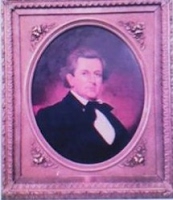 |
|
|---|---|
| Name: | Thomas Fitzgerald Green |
| Born: | 1804-12-25 |
| Died: | 1879-02-13 |
| Nationality: | United States |
| Occupation: | Superintendent |
Thomas Fitzgerald Green was born 1804-12-25, in Beaufort S.C. His father was William Montgomery Green a graduate of Trinity College, Dublin and a member of the failed Irish rebellion of 1798. As a result of the rebellion he immigrated to South Carolina, his son was born only a few weeks late. He named his son after two of his close friends who were also Irish patriots, Thomas Emmett and Lord Edward Fitzgerald. His mother was a member of the Fitzgerald family, she died in Savannah, Georgia when he was three. His father taught school first Beaufort and then in Savannah. Later he was granted a professorship at the University of Georgia, which kept him in Athens for a few years. Then he moved to Milledgeville and finally Macon, where his father would die. In 1833, Thomas F. Green graduated from medical college in Charleston,S.C.and set up a private practice at his home in Milledgeville. On 1828-12-04, he was married to Miss Adeline Crowder, together they had 9 children of whom 6 would live to adulthood.
Green was a Methodist, though not sectarian in his religious views. He was also a very active Freemason, joining the fraternity as a young man. He completed both the Scottish and York rites, becoming both a Knights Templar and a 32nd degree Mason. He also served the Grand Lodge of Georgia as Grand Secretary. He was very active in civil matters, though he did not seek public office, though he was appointed postmaster of Georgia for sometime. He was a major in the state militia and as a result was on hand to greet the Marquis de Lafayette on his second visit to Georgia. He politically was a Whig and hosted Henry Clay when he visited Milledgeville.
He originally was a trustee of the Asylum, but as a result of the resignation of the first superintendent Dr. David Cooper, he was asked to take over the asylum. He accepted the offer though it meant giving up his lucrative private practice. When he arrived at the asylum it still consisted of only one small building, an identical building had been commissioned but not completed due to lack of funds. The staff at the time was also very small consisting only of the steward, matron, and several slaves who served as attendants. They served 67 patients on his arrival in 1846 and that population would grow to 130 by 1849. The population would continue to grow steadily during his administration, though Green would soon see that the idea of financial “self-support”, that is that pay patients would be able to cover the costs of the paupers, was unrealistic and soon had to ask for additional funding. In February 1858, the reformer Dorothea Dix would visit the hospital, she had been a mental patient herself and after being released began advocating for improved conditions in the country’s asylums. Green himself was also reform-minded and banned the use of restraints except in the most extreme cases and began a system of moral treatment
The asylum would soon come under heavy financial distress as a result of the Civil War. The Union blockade caused the price of cotton to collapse which both caused falling government revenue and delinquency on the part of pay-patients. As a result Green failed to receive sufficient funding, a problem that would only grow worse as more and more territory fell to the Union. As a result the hospital quickly became overcrowded, and supplies became nearly unobtainable. As a result of the lack of medicine 1/7 patients would die as a “bowel infection” that swept through the asylum.
As Sherman’s march reached Milledgeville, the town was essentially burned to the ground. The asylum was left untouched but everything else had been torched and the roads were clogged with refugees though some disguised themselves as patients in the asylum. Now with no funding it was only a matter of time before the asylum’s population began starving. Green headed to Macon and appealed to Union Major-General Wilson. Wilson was sympathetic but supplies were very scarce and he had to be convinced by Green that a lack of supplies would force the asylum to release its patients. As a result Wilson supplied the asylum with 10 days worth of food. The rest Green would buy by selling everything of value in the asylum and then borrowing from friends such as the industrialist John P. King.
Another concern in the aftermath of the war was the matter of black patients who were now being sent to the hospital. State law required black patients to be segregated in separate quarters, as none existed Green denied the admission of black patients. However General Steedman would soon force Green to take black patients. He would receive no funds for their housing and was forced to ask the Freedmen’s Bureau for assistance. They agreed and began to send the asylum supplies.
After the war, Green’s Administration suffered several scandals. The first scandal involved an administrative officer diverting funds to “improper sources”. Green and the trustees initiated an investigation which resulted in the dismissal of the officer and several others. Also Green began to come under political pressure and was criticized for overpaying the staff. However it is suspected that the real cause of the pressure and the subsequent investigation was build case for an asylum centered at the new capital in Atlanta.
An investigation was soon began that was headed by two doctors, James F. Bozeman and William H. Cummings. Dr. Bozeman criticized the service of Green’s wife as matron as improper and suggested that the institution not be further enlarged and instead funds directed to a new institution. Dr. Cummings criticized the water supply for being and impure and the lack of railroad service, the inefficiency of the dairy, and the lack of research done by hospital physicians. The hospital was also missing about 515 gallons of whiskey, a result of physician and staff use. Dr. Cummings was able to have charges brought on Dr. Green, who quickly traveled to the capital to demand a hearing. He defended his conduct and he was cleared of the charges.
The same year also saw a number of repairs and renovations. Rooms for a 150 more patients were constructed, and gravel roofs were replaced with tin. Modern gas lighting was also installed along with better heat and ventilation. This work was mainly done through use of the patients. Their 448 patients at the hospital in the care of 4 physicians. Also after the investigation the board of trustees was increased from 3 to 5 members and Dr. Bozeman of the investigation was appointed to fill one of these openings. He instituted a number of reforms, mainly administrative, which brought a more formal and accurate form of record keeping to the asylum. Despite his earlier conflict with Dr. Green, Dr. Bozeman was instrumental in helping the asylum survive the post-war period, and his death in 1877 was considered a great loss for the asylum.
However, Dr. Green would outlive him only by a couple of years. On 1879-02-11 he fell ill and was dead only a few days later (1879-02-13). He was buried in the Milledgeville cemetery, and he was succeeded by his friend and the asylum’s assistant physician Dr. Theophilus Orgain Powell.
Sources
Cranford, Peter Gordon. But for the Grace of God: Milledgeville: Augusta, Ga.: Georgia Consumer Council, 1998.
Cook, Anna Maria (Green), and Leola Selman. Beeson. History of Baldwin County, Georgia. Anderson, S.C.: Keys-Hearn printing co., 1925. https//catalog.hathitrust.org/Record/000197537.
“Home - Develop CSH.” Accessed April 28, 2017. http://developcsh.com/.
Memoirs of Georgia; Containing Historical Accounts of the State’s Civil, Military, Industrial and Professional Interests, and Personal Sketches of Many of Its People. Vol. 2. Atlanta, Ga., The Southern historical association, 1859. http://archive.org/details/memoirsofgeorgia01unse.